


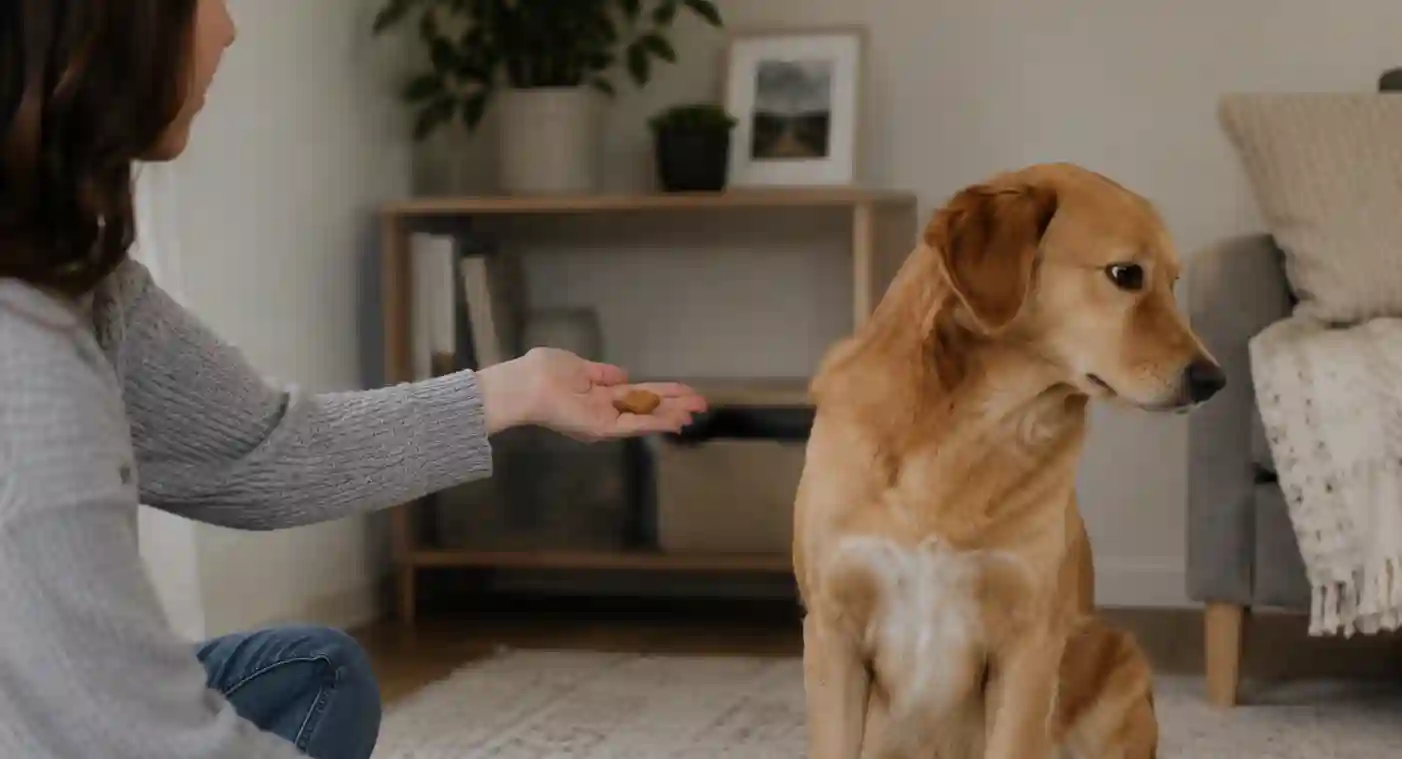
“I’ve tried treats… my dog just isn’t food motivated.”
This is something I hear constantly. And while it’s absolutely true that we should work with what motivates our individual dog (because the dog decides what is rewarding, not us), food refusal in training is rarely as simple as “my dog doesn’t like treats.”
In most cases, it’s not a motivation issue at all — it’s a learning history issue.
Before we get into the behavioural side, there’s one important non-negotiable point.
If your dog is frequently refusing food altogether, not just in training but in general, the first step is always a veterinary check. Gastrointestinal discomfort, pain, nausea, dental issues, or underlying illness will override any food motivation. No training technique can fix a medical problem.
Once health has been ruled out, we can start looking at behaviour, environment, and how food has been experienced by the dog.
What Actually Kills Food Motivation?
Dogs are not born “not food motivated.” They learn what food means in the context of their life and their humans.
Here are the most common ways food drive gets unintentionally reduced.
1. Free Feeding: Removing the Value of Food
One of the fastest ways to reduce food motivation is free access to food all day.
If food is always available in a bowl, it stops being a valuable resource. From the dog’s perspective, there is no reason to engage, problem-solve, or work for it – because it never runs out.
Training relies on value. If food has no value, it cannot effectively reinforce behaviour.
Dogs are far more likely to engage in food-based training when meals are structured, predictable, and earned rather than continuously available.
2. Negative Food Delivery
Snatchy dogs
If you offer a treat and then repeatedly pull your hand away, hesitate, or react negatively when the dog tries to take it and nips your fingers, you create confusion:
- “Are you offering me food or not? “
- “Am I allowed to take it?”
- “Why do you get mad at me when I take food you have given me?”
Some dogs become cautious and disengage completely. Others become faster and more frantic, trying to beat the withdrawal of the hand.
Either way, the result is the same: training becomes emotionally conflicted.
Food should feel predictable, safe, and clear. Not something the dog has to guess about.
3. Using Food as a Bribe
Food used for a bribe to get them to do something unpleasant: If food is offered to you as a bribe to do something you don’t want to do, guess what you’ve turned food into? A cue or a predictor that something bad is about to happen. Food comes out and the dog associates the food with an unpleasant result
Over time, food becomes a predictor of:
- discomfort
- pressure
- something the dog wants to avoid
In these situations, dogs may take the food but immediately disengage, or they may avoid approaching altogether.
You may also see what’s commonly called “sticky feet” behaviour – the dog stretches its head forward for food but keeps their body back. That’s a clear sign of conflict.
4. No History of Working for Food
Some dogs simply haven’t learned that food can be earned through behaviour.
If a dog has only ever experienced food in a bowl, or passively given without interaction, they may not naturally understand the concept of “work = reward.”
This isn’t a lack of motivation – it’s a lack of association.
Once they learn that behaviour makes food appear, motivation typically increases significantly.
5. Poor Training Mechanics
Clarity matters more than people realise.
Dogs do not generalise vague or inconsistent cues well.
If the same behaviour is cued each time differently; different hand position, different body language, different verbal cue the dog is left guessing.
And confusion is demotivating.
When a dog doesn’t understand how to earn reinforcement, they often disengage: sniffing, looking away, or leaving the task entirely.
If your dog doesn’t understand how to win, they stop playing the game.
6. Training Sessions That Are Too Long or Too Hard
Food refusal during training is often simply fatigue.
Common mistakes include:
- sessions that run too long
- too many repetitions
- treats that are too large or slow to eat
- increasing difficulty too quickly
Training should feel like a game, not an endurance test.
Short, frequent sessions are far more effective than long ones. Many dogs thrive on 30–90 second bursts repeated throughout the day.
Smaller rewards also matter; food should be quick to consume so the dog can re-engage immediately.
7. Stress and Emotional Overload
Stress suppresses appetite and motivation.
A dog that is anxious, overwhelmed, or uncertain will often disengage from food entirely.
This is particularly common in:
- new environments
- social pressure situations
- noisy or chaotic spaces
- training scenarios with unclear expectations
When stress rises, eating is not a priority – safety is.
8. Overfeeding and Low Hunger Drive
A dog that is overfed and overwight is not going to feel strong motivation to work for additional food.
This doesn’t mean food must be restricted harshly, but it does mean we should consider how meals and training reinforcement are balanced across the day.
Rebuilding Food Motivation and the Training Relationship
When food has lost value or created conflict, the goal is not to “push through it.”
The goal is to reset the association between:
- food
- handler
- learning
- safety
Here’s how we start rebuilding that relationship.
Remove Pressure From Delivery
Instead of hand-feeding directly, shift reinforcement away from your hand:
- mark the behaviour (“yes” or click)
- drop food into a bowl
- allow the dog to collect it without social pressure
This creates emotional distance from the handler while rebuilding positive association with food.
Use Alternative Delivery Systems
If hand-feeding has become problematic, use:
- lick mats or spoons with paste-based food
- food tubes for controlled delivery
- treat dispensers
- tossed rewards instead of hand presentation
This removes conflict from proximity while keeping reinforcement clear.
Train it
Teach your dog to take treats calmly without snatching – make luring easier and get a longer sit as a bonus
Build Food Engagement back up through Games
Food doesn’t have to be static or boring.
You can rebuild engagement by:
- scattering food for searching
- using puzzle feeders
- rolling or tossing kibble for chase motivation
- mixing food with toys (eat → toy access)
Your dog loves balls and frisbees more than food? Try throwing your food rewards so your dog is chasing their reward down, it connects the fun of chasing with the fun of training with food.
Or give them a treat, mark for chewing and swallowing the food and then toss their toy. Eating food equals getting my toy. I had to do this with Bruce when I got him because he flatly refused to eat if I had a ball in my pocket!
Many dogs respond extremely well to “hunt and find” feeding patterns because it satisfies natural behavioural needs.
Use Food as Part of Life, Not Just Training
Bowls are boring, a lot of dog food is boring; the same dry brown balls every day.
Instead:
- use food during training
- feed through games
- finish meals with enrichment activities
This builds a strong association: food appears because behaviour happens.
Keep Sessions Short and Successful
Dogs don’t need long training sessions to learn effectively. They need:
- clarity
- repetition
- success
- positive emotional association
Leave them wanting more, not exhausted.
Final Thought
A dog “not working for food” is rarely about preference it’s about history.
Food has either:
- lost value
- become confusing
- been associated with pressure
- or never been properly introduced as a learning tool
When we rebuild clarity, predictability, and positive associations, most dogs rediscover food as one of the most powerful motivators available; not because they suddenly “like food more,” but because it finally makes sense in context.


0 Comments